
Website Development Slough
Professional website development gives businesses and organisations in Slough a structured way to turn their online presence into a useful commercial asset. A successful website needs more than an attractive appearance: it should make services easy to understand, work smoothly across devices and guide visitors towards meaningful actions such as making an enquiry, requesting information or completing a purchase.
Planning also needs to account for performance, content, search visibility, maintainability and future requirements. Fast Online’s website development services cover these interconnected considerations, helping decision-makers assess what their site needs to achieve before design and development choices are made. The result should be a website built around genuine customer journeys and business objectives rather than features added without a clear purpose.
Website Design Slough
Website design within a development project should make it easier for visitors to understand a business, find relevant information and decide what to do next. For organisations in Slough, that means considering user experience alongside brand presentation rather than treating visual design as an isolated exercise. Clear navigation, sensible page hierarchy and well-positioned content can help users move from an initial landing page towards services, products or contact information without unnecessary friction.
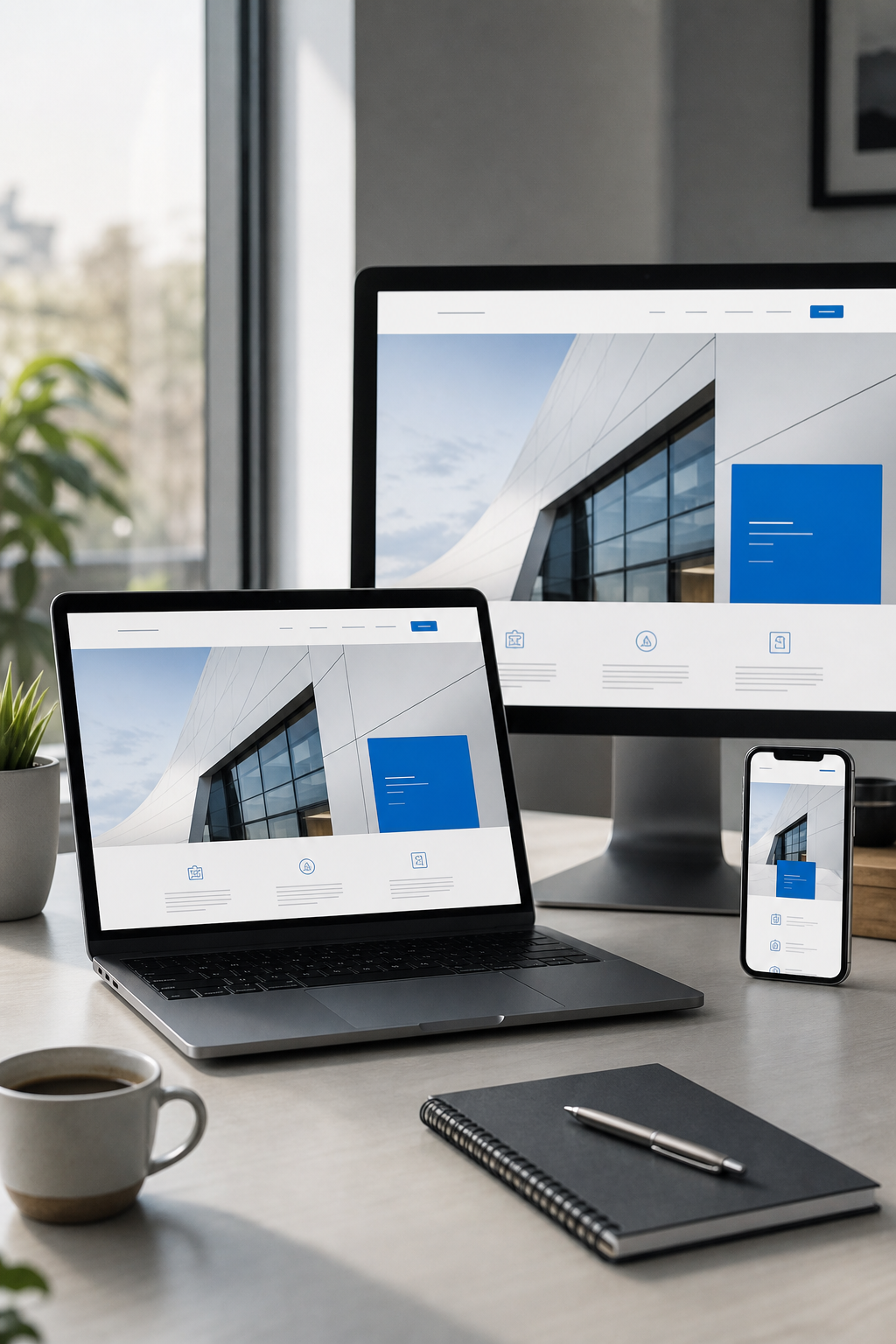
Responsive web design is equally important because layouts need to adapt effectively to different screen sizes and interaction methods. Typography, images, menus, forms and interactive elements should remain usable on smaller screens as well as desktop displays. A coherent design system can also create consistency across the site, making future pages easier to produce while keeping the organisation’s visual communication recognisable.

Website Redesign Slough
An older website may still function while creating practical problems through slow loading, awkward mobile behaviour, difficult content updates or a structure that no longer reflects the organisation. Website redesign for Slough businesses can address these limitations by reviewing the existing site’s technology, information architecture and content before deciding what should be retained, revised or rebuilt.
Modernisation can include simplifying templates, improving responsive behaviour, reducing unnecessary technical overhead and making the content management system easier to maintain. Performance, accessibility and technical search requirements should also be considered during the rebuild rather than added after launch. Businesses assessing whether improvement is necessary can review the common signs your website needs an upgrade. A planned redesign provides an opportunity to solve underlying limitations instead of simply applying a new visual style.
Planning the Right Website Development Solution for Your Business
Start with business goals and customer journeys
Before commissioning a website, define what the site is expected to help the organisation accomplish. A professional services business may prioritise qualified enquiries, while an ecommerce operation needs customers to discover, evaluate and purchase products efficiently. Other organisations may need appointment journeys, recruitment information, downloadable resources or an accessible source of essential information.
These requirements influence page structure, content, functionality and measurement. Mapping likely customer journeys can identify the questions visitors need answered before taking action and reveal which pages need to connect logically. This requirements stage also helps separate essential functionality from features that add cost or complexity without supporting a clear objective. Businesses comparing professional website development can therefore benefit from establishing objectives, audiences and functional requirements before comparing technical solutions.
Choose development technology around requirements
There is no single platform that suits every business website. The right approach depends on required functionality, content workflows, integrations, budget, internal capabilities and plans for future development. A straightforward company website might primarily need flexible content templates and simple administration, whereas ecommerce development can involve product management, payments, order handling and connections with other systems.
WordPress website development can be appropriate when an organisation wants a widely used content management system and the ability for authorised users to update structured site content. Platform choice alone, however, does not determine quality. Theme architecture, plugin selection, permissions, hosting, maintenance and custom development all affect how manageable and efficient a WordPress site becomes.
Developers also need reliable approaches to front-end implementation. Independent references such as CSS-Tricks web development resources and Smashing Magazine web design resources can provide useful further reading on contemporary development and design practices.
Responsive implementation, accessibility and performance
Responsive development should account for more than shrinking a desktop page. Navigation patterns, touch targets, content order, forms, images and interactive controls need to work at different viewport sizes and with different input methods. Testing should include representative mobile, tablet and desktop scenarios so that important tasks remain practical throughout the experience.
Accessibility should also inform decisions about semantic structure, keyboard use, colour contrast, labels and content. Requirements vary between projects, so accessibility expectations should be discussed during scoping rather than assumed after the interface has already been designed.
Performance is another practical development consideration. Oversized media, excessive scripts, inefficient third-party functionality and poorly configured delivery can increase loading times. Performance work can include image optimisation, sensible code and asset loading, caching and appropriate hosting configuration. The relevant priorities depend on the site’s architecture and functionality.
Build technical SEO into the foundation
SEO-friendly website development gives search engines a technically coherent site to discover and interpret. Useful foundations include crawlable navigation, appropriate status codes and redirects, logical internal linking, indexation controls, canonical handling where needed, descriptive page metadata and properly structured content.
Page performance and mobile usability also deserve attention, but technical SEO does not guarantee rankings, traffic or enquiries. Search performance depends on many factors beyond development, including content quality, relevance and competition. For broader context around acquisition and online campaigns, the independent WordStream digital marketing resources offer additional reading.
Plan content management and ongoing security
A website needs to remain useful after launch. During development, businesses should establish who will update pages, how different content types are managed, what permissions users require and whether routine changes can be made without unnecessary development work. Reusable content structures can improve consistency and make future additions more manageable.
Security is an ongoing responsibility rather than a one-time feature. Appropriate measures can include maintained software, sensible access controls, secure configuration, backups, updates and monitoring, depending on the system being used. The practical website security best practices provide further considerations for website owners. No website can sensibly be described as permanently secure simply because particular protections were applied at launch.
Testing, launch and measurement
Testing should reflect the website’s actual requirements. Before release, this can include checking key customer journeys, forms, links, responsive layouts, browser behaviour, content, integrations, redirects and analytics configuration. For a replacement website, preserving appropriate existing URLs or mapping redirects is particularly important because changing structure without a migration plan can leave visitors and search engines reaching obsolete addresses.
Measurement should connect back to the goals defined during planning. Correctly implemented analytics can show how people arrive, which pages they use and whether defined events are occurring. The data does not explain every customer decision, but it can support evidence-based investigation and prioritisation. Organisations building reports from relevant data sources can consult Google Looker Studio help for guidance on that reporting platform.
Approaching a website redesign
A redesign benefits from evidence about the current site. Existing analytics, frequently used pages, search visibility, customer questions and technical limitations can all inform what should change. Automatically discarding everything may remove useful content or journeys, while retaining an outdated structure simply because it already exists can carry old problems into the new build.
A structured website redesign guide can help decision-makers think through scope, content and migration before development begins. The objective is to identify which parts of the existing website contribute value, which constrain users or administrators, and what the rebuilt site must do differently.
How to compare website development companies
Businesses in Slough comparing providers should look beyond visual examples and ask how each prospective company approaches discovery, project scope, content, technical decisions and post-launch responsibilities. Useful questions include who owns or controls relevant website assets, which features are included in scope, how changes are handled, what testing is performed and what ongoing maintenance is expected.
It is also worth asking how the proposed platform matches the organisation’s needs rather than accepting a technology recommendation without context. A provider should be able to explain trade-offs in understandable terms. This guide to choosing a website development company provides further criteria for evaluating potential suppliers. Fast Online’s broader website development options can also be reviewed when considering the scope of a new project.
Common questions before commissioning development
Should a new business website use WordPress?
WordPress can be suitable for many content-led business websites, but the decision should follow the requirements. Editing workflows, integrations, bespoke functionality, security responsibilities, performance expectations and future maintenance all matter. A platform should solve practical needs rather than be chosen solely because it is familiar.
Can website development guarantee better search rankings?
No. Development can provide sound technical foundations for crawling, indexation, performance and usability, but it cannot guarantee a particular ranking. Search visibility also depends on relevance, content, competition and other factors outside the website build itself.
When is redesign preferable to small updates?
If the underlying templates, platform, navigation or mobile implementation constrain meaningful improvements, a structured redesign may be more appropriate than repeated cosmetic changes. If the technical foundation remains suitable and the problem is limited to particular content or components, targeted improvements may be sufficient. An initial audit can help distinguish between the two.
Related website development service areas
Readers researching comparable service-area information can also explore London when their website requirements extend to that area.
For organisations comparing regional service information elsewhere in England, the Nottingham page provides a related website-development overview.
The corresponding service-area information for Sheffield is available separately for readers researching that location.
Businesses considering requirements associated with another major UK service area can review the website-development page for Liverpool.
Related service information for organisations researching website development in Wales can be found on the Cardiff area page.
For another service-area comparison in southern England, readers can explore the dedicated Southend-on-Sea page.
Website-development service information relevant to Ashford is also available as a separate area resource.
Those researching website-development services in the north-west can additionally consult the area page for Lancaster.
Contact Us
Improve Your Website and Grow Your Business 🚀

500+ Projects Completed
No Long-Term Contracts
UK-Based Support
Proven Results
Chat with us on WhatsApp or fill up the form. We’ll contact you shortly.