
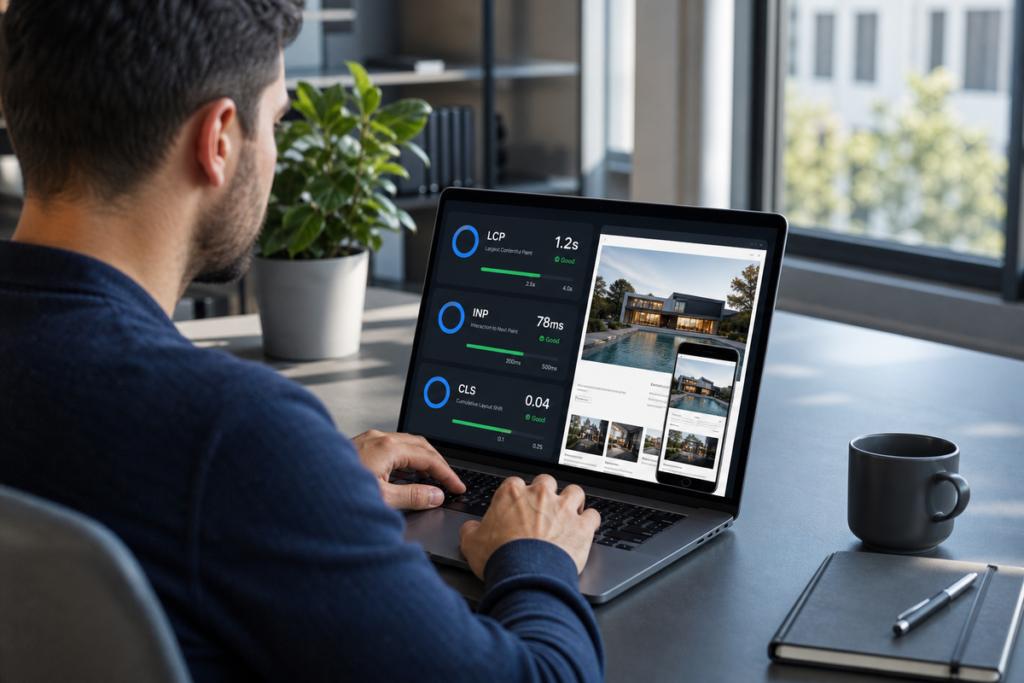
Core Web Vitals Explained is a topic that every website owner, developer and digital marketer should understand because website performance has a direct influence on how visitors experience a site. Fast loading pages, responsive interactions and stable layouts help people complete tasks with less frustration, whether they are reading an article, buying a product or submitting an enquiry. Google Core Web Vitals are a set of user-focused metrics designed to assess these important aspects of real-world performance.
Although Core Web Vitals are associated with technical SEO, they are not simply about search rankings. They encourage better design, efficient code and thoughtful website optimisation that benefits users across desktop and mobile devices. This guide explains each metric, how it is measured and practical ways to improve Core Web Vitals while maintaining a balanced approach to development.
What Are Core Web Vitals?
Core Web Vitals are a collection of performance metrics that evaluate how users experience a webpage. Rather than concentrating only on raw page speed, they examine loading speed, responsiveness and visual stability. Together these measurements provide a more complete picture of user experience than a single benchmark.
The three current metrics are Largest Contentful Paint (LCP), Interaction to Next Paint (INP) and Cumulative Layout Shift (CLS). Each measures a different stage of how visitors interact with a page. Improving one metric should not come at the expense of another, so website optimisation usually involves balancing multiple technical improvements.
When planning website development services, it is sensible to consider Core Web Vitals from the beginning rather than treating them as an afterthought.
| Metric | Measures | Main Focus |
|---|---|---|
| LCP | Loading of the largest visible content | Loading speed |
| INP | Responsiveness after user interaction | Rendering performance |
| CLS | Unexpected layout movement | Visual stability |
Why Core Web Vitals Matter
User experience comes first
A website may contain excellent information, but visitors can still become frustrated if pages load slowly, buttons react sluggishly or content shifts unexpectedly. Good Core Web Vitals help create predictable interactions that support trust and usability.
Technical SEO benefits
Google has confirmed that page experience signals form part of its wider assessment of webpages. However, relevant, helpful content remains essential. Strong technical SEO should complement high-quality content rather than replace it.
Projects completed in Swansea often benefit from performance planning during the earliest design stages because structural decisions influence future optimisation opportunities.
Similarly, businesses in Manchester frequently discover that website performance improvements support conversion optimisation alongside usability.
Largest Contentful Paint (LCP) Explained
Largest Contentful Paint measures how quickly the largest visible content element appears within the viewport. In many cases this is a hero image, large heading or featured content block. LCP reflects whether users feel that the page has meaningfully loaded.
Factors affecting LCP
- Slow web hosting.
- Large unoptimised images.
- Render-blocking CSS or JavaScript.
- Slow server response times.
- Inefficient browser caching.
Image optimisation is often one of the most effective improvements because oversized files delay loading speed. Modern formats, sensible dimensions and compression can reduce transfer sizes while maintaining acceptable quality.
A content delivery network (CDN) may also reduce latency by serving assets closer to visitors. Appropriate infrastructure decisions should match the needs of the website rather than following trends.
Businesses working in Leeds often review hosting, caching and media handling together because these components interact.
For organisations considering broader performance improvements, professionally planned website development can address underlying architectural issues alongside visual design.
Interaction to Next Paint (INP) Explained
Interaction to Next Paint measures how quickly a page visually responds after a user interacts with it. Examples include clicking a button, opening a menu or typing into a form. INP replaced the earlier First Input Delay metric because it offers a broader view of responsiveness across the page lifecycle.
Improving responsiveness
JavaScript optimisation plays an important role because long-running tasks can delay updates on screen. Breaking complex work into smaller tasks, reducing unnecessary scripts and removing unused code all contribute to smoother interactions.
The learning materials available from web.dev JavaScript guidance provide useful background on writing more efficient client-side code.
Developers interested in broader programming concepts may also find the official Go documentation valuable when exploring efficient application development.
Performance reviews carried out for organisations in Bristol frequently identify unnecessary third-party scripts as a source of slower interactions.

Cumulative Layout Shift (CLS) Explained
Cumulative Layout Shift measures unexpected movement of page elements while content loads. If a visitor tries to click a link and the page suddenly shifts, the experience becomes frustrating and potentially leads to mistakes.
Reducing layout shifts
- Reserve space for images and embedded media.
- Specify width and height attributes where appropriate.
- Avoid inserting new content above existing content unexpectedly.
- Use fonts carefully to minimise layout changes.
- Test responsive design across screen sizes.
Guidance from Material Design offers useful principles for consistent interface layouts and predictable visual behaviour.
When supporting organisations in Nottingham, reviewing responsive design across different devices often uncovers subtle CLS issues that desktop-only testing can miss.
How to Measure Core Web Vitals
Measurement should combine laboratory testing with real-world observations where available. Lab tools help diagnose issues under controlled conditions, while field data reflects genuine user experience.
Useful measurement methods
- Google Search Console.
- Browser developer tools.
- Performance auditing software.
- Real user monitoring platforms where appropriate.
The official Search Console documentation explains how to begin monitoring website performance and identifying Core Web Vitals issues.
Projects in Peterborough often benefit from tracking improvements over time rather than relying on a single test.
Common Ways to Improve Core Web Vitals
Optimise infrastructure
Reliable web hosting, efficient browser caching and an appropriate CDN all contribute to faster delivery. Organisations reviewing infrastructure may benefit from the technical resources available through Microsoft Learn.
Businesses in Slough sometimes discover that infrastructure upgrades produce larger gains than cosmetic front-end changes alone.
Reduce unnecessary code
Minifying assets, removing unused CSS and JavaScript, delaying non-essential resources and implementing lazy loading can reduce download sizes and improve rendering performance.
Websites developed in Stirling frequently achieve smoother mobile performance after reducing script complexity.
Improve media delivery
Image optimisation remains one of the highest-impact activities for many websites. Serving correctly sized images, compressing assets and avoiding unnecessarily large background graphics all contribute to better LCP.
Organisations in Southampton often combine media optimisation with responsive design improvements for broader usability gains.
Review ongoing performance
Website optimisation should be continuous. New plugins, advertising scripts and design changes may affect Core Web Vitals over time, making regular monitoring worthwhile.
Businesses in Northampton often include performance reviews within their maintenance schedules.
Teams working in Bolton can also benefit from testing before major releases to identify regressions early.
Careful planning for organisations in Bath frequently balances functionality, accessibility and speed rather than focusing on a single metric.
Projects delivered in Crawley demonstrate the value of incremental optimisation instead of dramatic redesigns when performance issues are isolated.
For larger organisations in London, ongoing collaboration between developers, designers and content teams helps maintain good performance as websites evolve.
Where deeper architectural improvements are required, comprehensive website development solutions can support long-term performance goals.
Conclusion
Understanding Google Core Web Vitals means looking beyond simple page speed scores. LCP focuses on loading speed, INP measures responsiveness and CLS evaluates visual stability. Together they encourage websites that feel fast, predictable and enjoyable to use. Although technical SEO benefits are important, the primary objective should always be improving user experience. Regular measurement, sensible optimisation and thoughtful development practices create a stronger foundation for sustainable website performance.
Frequently Asked Questions
What are Google Core Web Vitals?
They are user-focused performance metrics covering Largest Contentful Paint, Interaction to Next Paint and Cumulative Layout Shift.
Do Core Web Vitals affect SEO?
They form part of Google’s wider page experience assessment, but high-quality, relevant content remains essential.
Is page speed the same as Core Web Vitals?
No. Page speed is broader, while Core Web Vitals focus on loading, responsiveness and visual stability.
How often should Core Web Vitals be checked?
Regular monitoring is recommended, especially after major design, infrastructure or functionality changes.